Vasudhara Falls
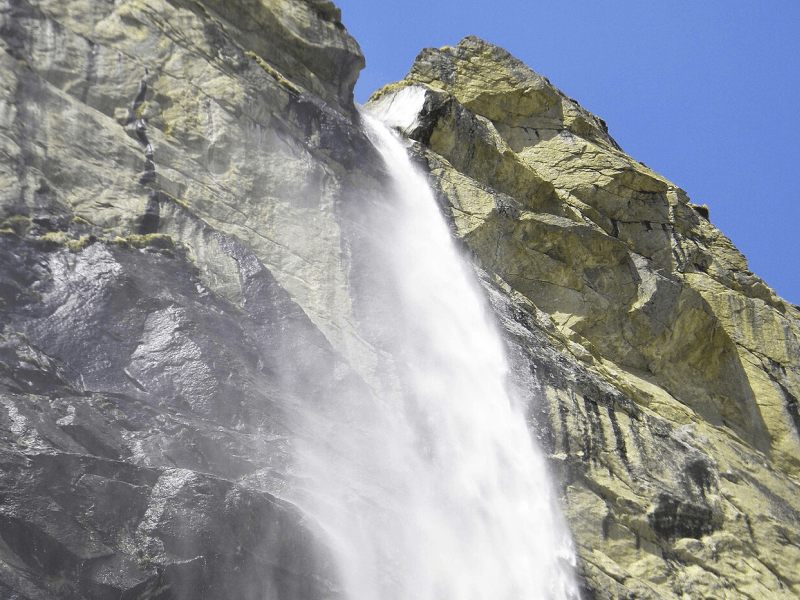
The road to Badrinath is busy in parts with pilgrims, parked vehicles, and the occasional rush around temple hours. But just a little ahead, past Mana village, things begin to thin out. Shops become sparse. The air feels colder, a bit sharper. And then, quite simply, the road stops. What lies ahead is not a dramatic transition. No grand gateway, no formal entry point. Just a trail that moves quietly into the mountains, leading towards Vasudhara Falls . Set at an altitude of around 3,700 metres, the falls sit well beyond the usual temple circuit. It is not a place one arrives at casually. The distance, the terrain, and the altitude ensure that.
Mana village is the last motorable stop, roughly 3 kilometres from Badrinath. Shared taxis run frequently during the season, usually charging a shared amount per person. Many visitors also choose to walk this stretch, especially in the morning when the road is quieter. Mana itself is small but active during peak months. A few cafés, local stalls, and signboards pointing towards nearby attractions; nothing overwhelming, but enough to pause before heading further. Beyond this, there are no vehicles. The rest has to be done on foot.
The trail to the falls is about 6 kilometres one way. On paper, that may not sound like much. In reality, the altitude changes things. The path is fairly clear and does not require technical trekking skills. Still, it is a steady climb. The kind that doesn't exhaust immediately but builds gradually. Breathing feels slightly heavier after a point, especially for those who have not acclimatised. There is very little shade. The landscape remains open for most of the route, with rocky patches, distant ridges, and the Alaknanda River visible in parts below. The wind tends to pick up as the day progresses.
Most people take between two and three hours to reach the falls. Not because the terrain is harsh, but because frequent pauses become necessary. Sometimes for rest. Sometimes just to take in the surroundings.
The silence is noticeable. Not silence in the complete sense, but the cessation of constant noise. No traffic, no crowded chatter. Only the wind and distant cracking of water and footsteps. The trail does not rush the traveller. There are no quick rewards, no sudden viewpoints designed for photographs. The terrain shifts only gradually, almost grudgingly. It is the pace that distinctly defines the journey along with the destination.
The initial view of Vasudhara Falls is not as impressive as one may expect. It doesn't come rushing in, a cacophony of water. Instead, the waterfall seems to grow gradually, a thin stream falling from on high only as it drifts sideways in the breeze. Up close, it feels less like a heavy cascade and more like a fine spray. On certain days, the water does not even fall straight down; it disperses before reaching the ground. There is a local belief that the water does not touch those who are not pure at heart. Whether one believes this or not, the way the water moves light, almost evasively, does give that impression. It is not a place for long halts. Most visitors spend some time, sit quietly, and begin the return.
The region carries associations with the journey of the Pandavas towards heaven. The route beyond the falls is often linked to that final ascent, though it stretches much further into remote terrain. There are no elaborate signboards explaining these stories. They exist mostly in conversation shared by locals, repeated by guides, or picked up along the way. For some, this adds meaning to the walk. For others, it remains just a background detail. Either way, it does not dominate the experience.
The accessible window is relatively short. From May to October, the route remains open and manageable. Early summer sees stronger water flow due to melting snow. By September and October, the skies are clearer, and the surrounding peaks are easier to view. Monsoon months can be unpredictable. Rain makes the trail slippery, and visibility often drops. Winters, on the other hand, close the route almost entirely due to snow. Timing within the day also matters. Starting early around 6:00 or 7:00 AM makes the walk easier. The wind tends to increase later in the day, which can make the return slightly more tiring.
There is no entry fee for visiting the falls. The main expenses are related to reaching Mana and optional services.
- Shared taxi (Badrinath to Mana)
- Local guide (optional)
- Snacks/meals in Mana
Beyond Mana, there are no reliable food options. Carrying water and basic snacks is necessary. Mobile networks are inconsistent. It is best not to rely on connectivity once the trek begins.
Visitors tend to underestimate a few aspects of this journey. Altitude is one of them. Even those who feel fine in Badrinath may notice slight discomfort during the trek, mild headaches, breathlessness, or fatigue. None of it is unusual, but it does slow things down. Another is exposure. There are long stretches without shade, which makes sun protection important, even in cooler weather. Footwear also is more important than you might think. The ground is rocky and uneven in places, and having a good grip helps especially on the descent..
The return journey feels different. Easier? Not exactly, but more so familiar. The same terrain seems changed: light shifts, shadows reconfigure, and distances shrink. If there are any conversations, they usually resume on the return trip. Reaching Mana again brings back small signs of activity: tea stalls, a few resting travellers, and the sound of vehicles in the distance. From there, Badrinath is a short drive away.
There are more accessible places nearby. Shorter walks. Easier viewpoints. Yet, people continue towards Vasudhara Falls . Perhaps because it asks for a little more effort. Not extreme, but enough to slow things down. Enough to notice the landscape properly. It is not a place that overwhelms. It does not try to. And maybe that is exactly why it stays in memory.