Tapt Kund
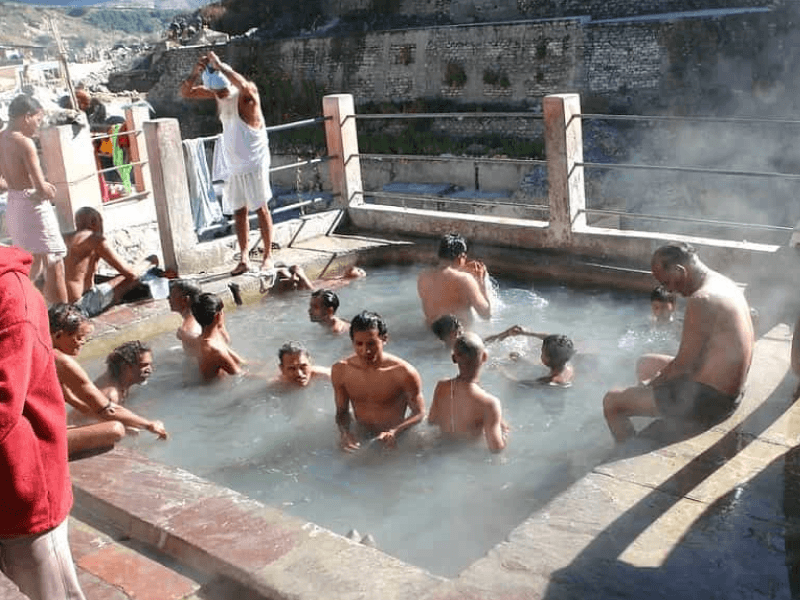
Just below the sacred premises of Badrinath Temple, there's a place that quietly draws every traveller before they step into the shrine. Tapt Kund doesn't look dramatic at first glance. It's simple, almost understated. But it carries a significance that goes far beyond its size.
For most visitors, Tapt Kund isn't just a stop. It's a ritual. The contrast hits you immediately. Cold mountain air, the sound of the Alaknanda River nearby, and then this naturally warm water pool that feels completely out of place in such a harsh landscape. Somehow, Tapt Kund manages to be both practical and deeply spiritual at the same time.
Most people who come to Badrinath are already carrying something. Hours of road travel through mountain terrain, cold that settles into your bones somewhere around Joshimath, and the particular kind of tiredness that comes from a long pilgrimage. Tapt Kund meets you exactly there.
Before you enter the temple, before the darshan, before any of it, there's this. Warm water in the middle of one of the coldest places you'll visit. It sounds simple. In practice, it resets something.
Pilgrims have been beginning their visit to Badrinath here for centuries, taking a dip in the sulphur-rich water as an act of purification before stepping into the shrine. But even for travellers who aren't visiting for religious reasons, Tapt Kund offers something worth stopping for. A moment that asks nothing of you except to slow down, feel the warmth, and be present for a few minutes before the day continues. That's rarer than it sounds at a place like Badrinath.
The short answer is the water. Naturally warm, geothermally heated, consistently comfortable even when the air around it is anything but. In a landscape where temperatures can drop sharply and without much warning, stepping into Tapt Kund feels almost implausible. Like the mountain decided to offer something gentle in the middle of all that severity.
The sulphur content in the water is believed to carry therapeutic properties, and whether or not you arrive with that in mind, the physical effect is noticeable. Muscles that have been tensed against the cold start to release. The kind of low-level physical discomfort that builds up over a long journey quietly dissolves.
But the thing that stays with most people isn't just the temperature. It's the atmosphere around it. No rush, no noise, no one trying to move you along. People arrive, ease in, sit with the warmth for a while, and leave when they're ready. For a site this close to one of the most visited temples in the Himalayas, that stillness is genuinely unexpected. And that, more than anything else, is what makes Tapt Kund worth your time.
The experience here is simple but the kind that stays with you.
Bathing areas are designated separately for men and women. The water is usually warm enough to feel comfortable even when the air around it isn't. Early mornings are something else entirely. Steam rises off the surface, the temple above is just beginning to stir, and the whole place carries a stillness that's hard to find anywhere else in Badrinath.
What stands out most is the contrast. Stepping back out into the cold air after a dip feels almost as striking as stepping in. That shift lingers.
Tapt Kund isn't about spending hours. It's about a short, meaningful stop that changes the tone of everything that follows.
Tapt Kund is a short walk from Badrinath Temple. That's genuinely it.
Travel to Badrinath by road and walk towards the temple complex, and Tapt Kund is right there below the temple steps. You won't need directions once you're in the area.
The nearest railway station is Haridwar, and the closest airport is Jolly Grant in Dehradun. From either point, road travel takes you up to Badrinath.
Unlike most significant stops in this region, reaching Tapt Kund requires no trekking. Which means it's accessible to all age groups, including older pilgrims and those travelling with children.
Worth keeping these in mind before you go:
- The water can feel very warm when you first step in. Take it slowly, don't rush the entry.
- Bathing areas are segregated for men and women. Follow the designated sections.
- Carry your own towel and a fresh change of clothes. Basic essentials aren't always available on the spot.
- The area around the kund can get slippery. Watch your step, especially near the edges.
- If you can avoid peak temple hours, the experience is quieter and more personal.
- Tapt Kund is a shared, sacred space. Decorum and respect for local customs matter here.
The experience depends as much on how you approach it as it does on the place itself.
Tapt Kund doesn't try to impress. It doesn't demand your attention or ask you to do very much at all.
But it stays with you.
The warmth of the water, the bite of the air just beyond it, the quiet movement of people around you. Even in a shared space, the moment feels personal. Somehow, that combination of cold and warmth and ritual creates something that's hard to name but easy to remember.
The warmth of the water, the bite of the air just beyond it, the quiet movement of people around you. Even in a shared space, the moment feels personal. Somehow, that combination of cold and warmth and ritual creates something that's hard to name but easy to remember.