Sathopanth Tal
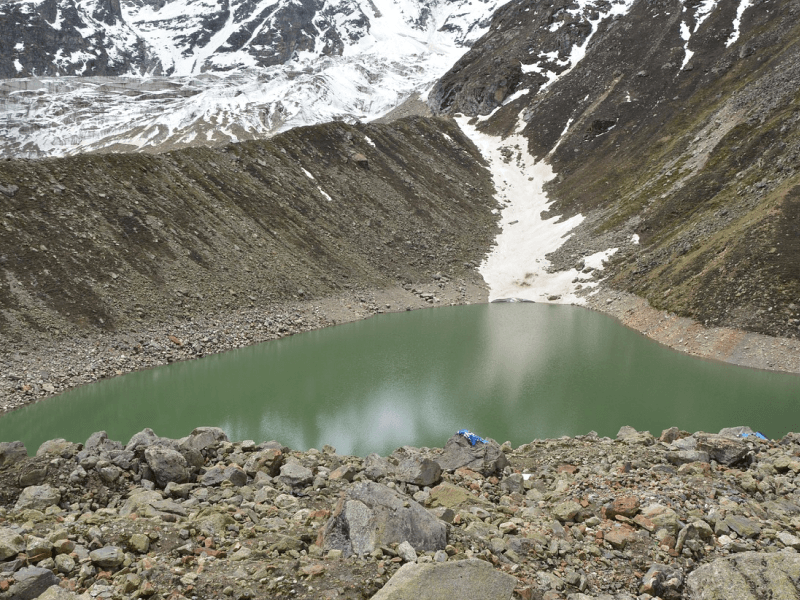
Some places in the Himalayas feel remote. Sathopanth Tal feels like it belongs to a different era entirely. Tucked deep beyond Badrinath, this glacial lake doesn't reveal itself easily. It asks for effort, patience, and a certain kind of respect before it lets you in.
What makes Sathopanth Tal different isn't just where it sits on a map. It's what the journey does to you. The terrain is unpredictable, the altitude is unforgiving, and the trail is long. But for those who make it, the reward isn't just the lake. It's everything leading up to it.
This isn't a place built for casual sightseeing. No developed viewpoints or formal tourist infrastructure. Sathopanth Tal draws travellers looking for something quieter. Something that feels earned.
Sitting at around 4,400 metres, the lake is ringed by peaks like Chaukhamba and Nilkanth. Its triangular shape carries deep significance locally, associated with Brahma, Vishnu, and Shiva. Whether the mythology resonates with you or not, the stillness here is hard to explain and harder to forget.
No crowds. No cafés. No noise. Just a lake sitting quietly in one of the most open, raw landscapes you'll find anywhere in the Himalayas.
The experience starts well before you reach the lake.
From Mana village, the trail gradually leaves habitation behind. The first stretch feels manageable, almost familiar. Then the terrain shifts. Trees thin out, the ground turns rocky, and the trail visibility varies by season.
By Chakrateertha, the surroundings feel genuinely exposed. Very little cover, mountains pressing in from all sides.
Sathopanth Tal doesn't announce itself dramatically. It just comes into view, calm and still, reflecting the peaks around it. No grand reveal. Just the lake, exactly as it's been for centuries.
The clarity of the water is something people mention often. On certain days it looks almost untouched, as if nobody has been here in years.
Getting to Sathopanth Tal takes roughly 5 to 6 days depending on your pace and conditions on the ground.
The standard route goes like this:
Mana Village → Lakshmi Van → Chakrateertha → Sathopanth Tal
It's classified as moderate to difficult. No technical climbing required, but don't let that lull you. The combination of altitude, distance, and terrain makes this a genuinely demanding trek.
Past Lakshmi Van, the trail becomes unpredictable. Loose rocks, uneven surfaces, gradual inclines that keep stealing time. And as the altitude climbs, even short distances start to feel much longer than they should.
Rushing doesn't help here. Taking breaks, listening to your body, and letting yourself adjust is the only approach that works.
Plan your visit between May to June or September to early October.
During these windows, the trail is relatively stable, skies are clearer, and the surrounding peaks are actually visible. Early summer and post-monsoon both have their own quality.
Monsoon months are a different story. Landslides, slippery trails, and unpredictable conditions make the trek genuinely risky. Winter closes the region down entirely due to heavy snowfall.
And even in the good months, weather moves fast up here. A clear morning can turn overcast by early afternoon without much warning. Go prepared for both.
The journey begins from Badrinath, which is well connected by road.
From Badrinath, you travel to Mana Village, the last point accessible by vehicle. After that, everything is on foot.
The nearest railway station is Haridwar. The closest airport is Jolly Grant in Dehradun. From either point, road travel takes you up to Badrinath.
A local guide is worth hiring. Parts of the trail aren't clearly marked, and visibility can drop quickly when weather turns. A guide who knows the terrain is not a luxury on this trek.
A few things that are genuinely worth knowing before you go:
- The altitude is real. Acclimatisation isn't optional, it's necessary.
- Nights get cold. Significantly cold. Warm layers matter more than you think.
- There are no hotels or lodges beyond Badrinath. Camping is how the whole trek works.
- Mobile connectivity drops out at or before Badrinath. Plan around that.
- Physical fitness counts. Some prior trekking experience helps a lot.
- Carry everything you need. There are no shops on the route.
Sathopanth Tal rewards preparation far more than it rewards optimism.
There's a quiet to Sathopanth Tal that's hard to put into words.
It's not dramatic. It doesn't overwhelm you with colour or movement. What it offers instead is slower and, for many people, more lasting.
Wind moves across the lake without much disturbance. The mountains stay exactly as they are. Conversations get fewer. Thoughts feel clearer.
For a lot of trekkers, Sathopanth Tal ends up being less about reaching a lake and more about stepping away from everything else for a few days. That sounds like a cliché until you're actually standing there.