Mana Village
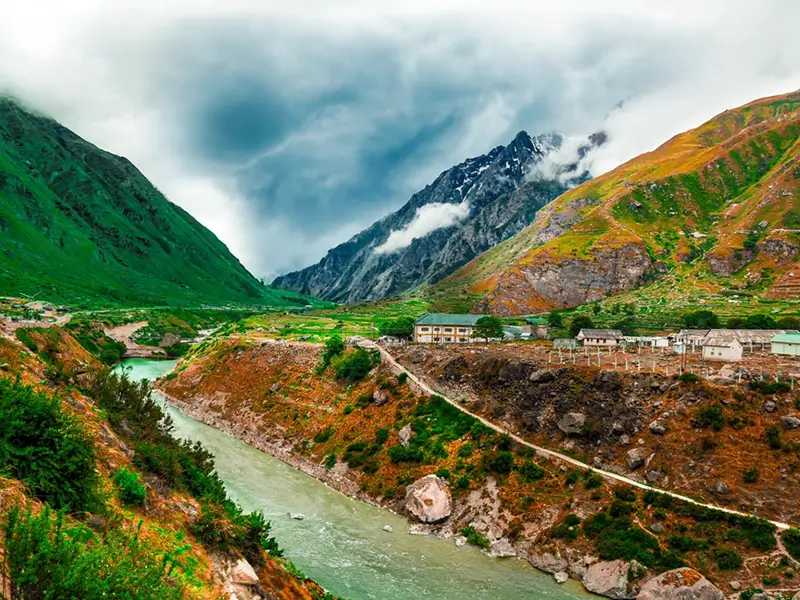
Settled right in the lap of the mighty Himalayas rests a village that is a marker of India. From Mana Village, the Indian territory starts. And somehow, that feels fitting. Before a traveller even begins to explore the vastness of the country, this small settlement offers a glimpse of what India holds within. Culture, history, faith, and stories that seem older than the mountains themselves.
From strategic importance to mythology and history, Mana Village carries more meaning than its size suggests. Just 3 km from the Badrinath Temple, it almost slips past unnoticed at first. But the moment you begin walking through it, you realise that this place has far more to say than its modest size suggests.
The story of Mana Village is really a story of survival. Living in the high Himalayas has never been easy, yet communities have called this place home for centuries. Long before roads reached these mountains, the village played an important role in the trade route between India and Tibet.
Many pilgrims extend their Badrinath journey to reach Mana, drawn by its calmer, reflective atmosphere. Narrow lanes, small tea stalls, and villagers going about their daily lives offer a softer contrast to busier pilgrimage centres.
The people of the village, mainly from the Marcha and Tolcha communities of the Bhotiya tribe, once travelled across harsh mountain passes carrying goods such as wool, salt, and herbs. These journeys were not simple trading trips. They were long, dangerous expeditions through unpredictable terrain, and they shaped the identity of the people who lived here.
Walking through Mana Village today, traces of that past still remain. The houses are built with thick stone walls and heavy slate roofs, designed to endure months of snow and biting cold winds. Winters here are unforgiving. For nearly half the year, the village is buried under snow, and the residents migrate to lower regions until spring returns.
Yet every year they come back. That return itself tells you something about the bond between the people and the land. Mana Village is not simply where they live. It is where their roots lie.
Once known as the last village of India, Mana is now officially celebrated as the "First Indian Village" — a small shift in wording that carries a strong sense of pride. Standing here, you are quite literally at the edge of the Indian map, with the Tibetan plateau rising just beyond.
Many pilgrims extend their Badrinath journey to reach Mana, drawn by its calmer, reflective atmosphere. Narrow lanes, small tea stalls, and villagers going about their daily lives offer a softer contrast to busier pilgrimage centres.
Then there is the Saraswati River — which, in most parts of India, survives only in scripture. Here it appears in dramatic fashion, rushing through the rocks before vanishing again. Seeing it in person leaves a lasting impression.
Between its location, its quiet charm, and its spiritual associations, Mana Village has slowly become one of those places people feel compelled to see at least once.
Once known as the last village of India, Mana is now officially celebrated as the "First Indian Village" — a small shift in wording that carries a strong sense of pride. Standing here, you are quite literally at the edge of the Indian map, with the Tibetan plateau rising just beyond.
Many pilgrims extend their Badrinath journey to reach Mana, drawn by its calmer, reflective atmosphere. Narrow lanes, small tea stalls, and villagers going about their daily lives offer a softer contrast to busier pilgrimage centres.
Then there is the Saraswati River — which, in most parts of India, survives only in scripture. Here it appears in dramatic fashion, rushing through the rocks before vanishing again. Seeing it in person leaves a lasting impression.
Between its location, its quiet charm, and its spiritual associations, Mana Village has slowly become one of those places people feel compelled to see at least once.

For a settlement so small, Mana Village holds an impressive number of landmarks - each carrying a story of its own.
Ganesh Gufa
A short walk from the village - the small, peaceful cave where Lord Ganesha is believed to have written the Mahabharata as Vyas dictated it.
Vyas Gufa
The cave attributed to Sage Ved Vyas himself, tucked along the Saraswati. A place of profound stillness and ancient wisdom.
Bheem Pul
A massive natural rock bridge over the roaring Saraswati. Legend says Bhima lifted this stone so Draupadi could cross during the Pandavas' final journey.
Saraswati River
Emerging forcefully from the mountains, the river rushes through the rocks with tremendous energy before disappearing again — a remarkable sight.
Vasudhara Falls Trek
A 5-km trek from Mana rewards you with a 400-ft cascade believed to bless only pure-hearted pilgrims with its refreshing spray.
First Tea Shop of India
A small stall that proudly carries the title — often the best place to sip chai, warm up, and hear local stories from villagers.
By Road
Reach Badrinath first, then continue the final 3 km to Mana Village via NH-7. Taxis are easily available.
By Air
Nearest airport is Jolly Grant Airport, Dehradun — approximately 315 km away. Continue by road from there.
By Rail
Rishikesh and Yog Nagari Rishikesh are the closest stations. The drive from either usually takes 10-12 hours.
- Acclimatise slowly. At over 10,000 feet, give your body time to adjust before trekking further.
- Stop at the First Tea Shop of India. A cup of chai here comes with local stories you'll not find elsewhere.
- Shop for handwoven Bhotiya crafts. Woollen shawls, carpets, and blankets make meaningful souvenirs.
- Check the weather. The region is accessible May-October; temperatures drop fast even in summer.
- Respect the environment. Keep silence around caves and temples to preserve the peaceful atmosphere.