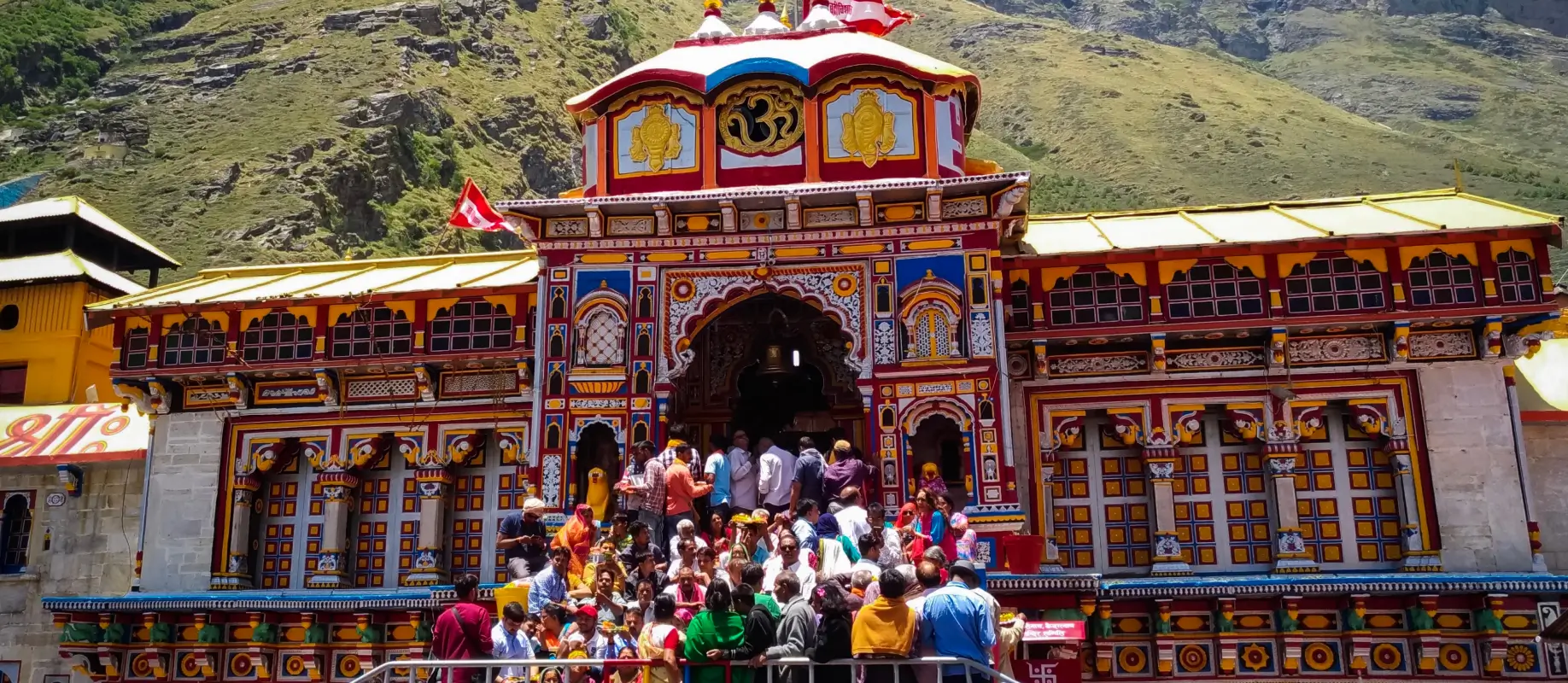
If you've ever stood on the banks of the Alaknanda River as it roars past the Badrinath temple, you'll notice something quickly: the air here isn't just thin; it's heavy with a specific kind of energy. This isn't just a "tourist spot" or even just a temple. To the locals of Uttarakhand and the millions who trudge up these winding Himalayan roads every year, it is the home of Lord Badri Vishal.
Step into any tea stall in the Garhwal hills and you'll hear it. People don't just say they are going to "Badrinath". They say they are going for the darshan of Badri Vishal. It's a title that feels as massive as the granite peaks of Nar and Narayan that flank the town. But where did this specific name come from? It turns out, the answer lies in a blend of ancient botany, a wife's fierce devotion, and the cultural grit of the mountain people.
The Berry Forest of the Gods
Before there was a temple with a colourful, almost Tibetan-style facade, there was a forest. The name "Badri" doesn't actually describe a god; it describes a tree. Specifically, the Badri (the Indian jujube or Ber tree).
In the Vedic era, this high-altitude valley wasn't the stark, rocky landscape we see today. It was Badrikashram, a sprawling grove of jujube trees. For the ancient sages Nar and Narayan (avatars of Vishnu), this was the ultimate "off-the-grid" location for penance. They weren't looking for comfort; they were looking for a place where the silence of the mountains could match the silence of their meditation.
When we talk about the badrinath name history, we are essentially talking about the "Lord of the Forest of Berries." It's a grounded, earthy origin for one of the most high-altitude spiritual seats in the world.
The Legend: A Canopy of Love
The most enduring story of badri vishal is one of sacrifice. Legend tells us that Lord Vishnu, seeking absolute solitude, sat down for an intense, multi-year meditation in this valley. He became so absorbed in his internal journey that he forgot the physical world existed.
He didn't notice when the summer faded. He didn't notice when the Himalayan winter: vicious even today, settled in. As the snow began to bury him, Goddess Lakshmi saw her consort freezing. She couldn't wake him; his penance was too sacred to interrupt. Instead, she took the form of a massive Badri tree, spreading her branches over him to catch the ice and snow, acting as a living umbrella against the blizzard.
When Vishnu finally emerged from his trance, he saw Lakshmi, weather-beaten and covered in frost—standing guard. Deeply moved, he declared that from that moment on, his name would always be preceded by hers. Since she had protected him as a Badri tree, he would be known as Badrinath (The Lord of the Badri).
What Does "Vishal" Actually Mean?
If Badrinath is the formal name, "Badri Vishal" is the affectionate, reverent title. The badri vishal meaning is simple yet profound: "The Great Lord of Badri" or "The Magnificent One."
In Indian philosophy, Vishal implies something that is vast, expansive, and all-encompassing. When pilgrims crest the final hill and see the temple sitting small against the backdrop of the Neelkanth peak, they don't see a small building. They see a "Vishal" presence: a spiritual weight that fills the entire valley. The title grew out of centuries of oral tradition. It wasn't an official rebranding; it was the natural reaction of humans feeling very small in the presence of something very large.
Why Is Badrinath Famous? (It's Not Just the View)
You'll often hear Badrinath cited as the "final destination." But why is badrinath famous beyond its scenic location?
- 1. The Northern Pillar: It is the most significant of the Char Dham (the four cardinal pilgrimage sites of India). While the other three are at sea level or on the coast, Badrinath demands a climb into the clouds.
- 2. The Meditative Form: Most idols of Vishnu show him reclining on a serpent or standing with weapons. Here, he is in Padmasana (the lotus pose), deep in meditation. It is a rare "quiet" version of the deity.
- 3. The Black Stone: The idol is made of Saligram stone, and tradition says it was pulled from the freezing depths of the Narad Kund by Adi Shankaracharya himself.
"Jai Badri Vishal": More Than a Greeting
If you want to feel the real pulse of this name, you have to look at the Garhwal Rifles. For one of the Indian Army's most legendary infantry regiments, "Jai Badri Vishal" isn't just a prayer, it's their official war cry.
There is a profound cultural significance here. For a soldier from the mountains, Badri Vishal is the ultimate guardian of their home. When they roar this name in battle, they aren't just shouting for a god; they are shouting for the honour of their peaks, their families, and the ancient protection of the Badri tree.
On the road to the temple, the phrase acts as a social glue. Pilgrims who have never met, coming from opposite ends of the country, greet each other with a simple "Jai Badri Vishal". It's a way of saying, "I see the struggle you took to get here, and I honour the destination we are both seeking."
A Final Thought from the Heights
As the sun sets behind the peaks, the temperature in Badrinath drops instantly. You'll see people shivering in the queue, wrapped in heavy woollens, their breath visible in the air. Yet, as the temple bells begin to ring for the evening Aarti, the shivering seems to stop.
The story of the Badri tree, the story of protection through the storm isn't just a myth here. It's a metaphor for why people keep coming back. Life is often a blizzard, and for a few hours in this high-altitude valley, people feel they've found a bit of shelter under the branches of the "Great Lord".