People don't usually decide on Badrinath Dham the way they pick a weekend destination. It tends to come up slowly. A relative mentions it. Someone shares photos from their yatra. Or it simply sits at the back of the mind for years before turning into an actual plan.
By the time the trip happens, it already feels familiar in a strange way.
Set deep in the Himalayas, Badrinath is not the kind of place you “cover” in an itinerary. It asks for time, or at least a willingness to slow down. The roads are long, the air is thinner than expected, and nothing really moves in a hurry. That can feel inconvenient at first. Then, gradually, it begins to make sense.
The First Glimpse Feels Different
The approach to Badrinath is not dramatic in a cinematic way. There is no sudden reveal. The town appears almost quietly, after hours of winding roads and turns that all start to look the same after a point.
And then suddenly, it is there.
The Alaknanda River runs alongside, steady and cold, cutting through the valley. Small buildings line the narrow roads. Shops display offerings, woollens, and small idols. It feels lived-in, not curated.
Most travellers pause without really planning to. Some stand near the river. Others just sit for a bit, letting the journey settle. That first stop, even before the Badrinath Dham Darshan , often becomes part of the memory.
Why Badrinath Holds Its Place
There is history here, but it does not present itself like a lesson. It comes through in fragments. In the stories people carry with them, in what priests mention in passing, in what older pilgrims explain to younger ones while standing in queues.
The temple is dedicated to Lord Vishnu, worshipped as Badrinarayan. It is also one of the Char Dham sites, which already gives it a certain weight in the larger map of pilgrimage in India.
But beyond that, there is something quieter.
Some believe Vishnu meditated here. Others talk about the protective presence of Lakshmi. These are not things everyone analyses deeply while visiting. Yet they shape the way people behave here. The way they lower their voices. The way they wait.
That is usually where the meaning of a Badrinath Dham Darshan begins to form. Not in facts, but in how the place feels.
Timing Is Not Just Practical Here
Anyone planning a visit will eventually look up Badrinath Dham Timing, but the idea of timing here goes beyond temple hours.
The temple opens only for a part of the year. Winter closes everything down. Snow takes over, and the region becomes inaccessible. When it reopens around April or May, there is a sense of return. Almost like the place is waking up again.
Mornings start early. Really early. The first darshan happens when the air is still sharp and cold. People line up before sunrise, wrapped in layers, sometimes half awake but fully present.
Evenings, on the other hand, feel slower. The light fades quickly in the mountains. Conversations soften. The temple begins to glow rather than stand out.
It is not just about catching the right slot. It is about noticing how the day changes around the temple.
The Route That Stays With You
The Badrinath Dham Route is long enough to test patience, especially for first-time travellers. From Haridwar or Rishikesh, the journey moves steadily into the hills, passing through places that most people had only heard of before.
Devprayag. Rudraprayag. Joshimath.
The rivers change along the way. Their colours, their speed, even their sound. Sometimes they run quietly beside the road. Sometimes they crash against rocks with a force that makes people fall silent mid-conversation.
There are stretches where nothing much happens for hours. No big towns, no major stops. Just road, river, and mountains that don't seem to move at all.
And then, without realising it, travellers begin to slow down internally as well. The journey stops feeling like a delay and starts feeling like part of the visit.
The Temple, Up Close
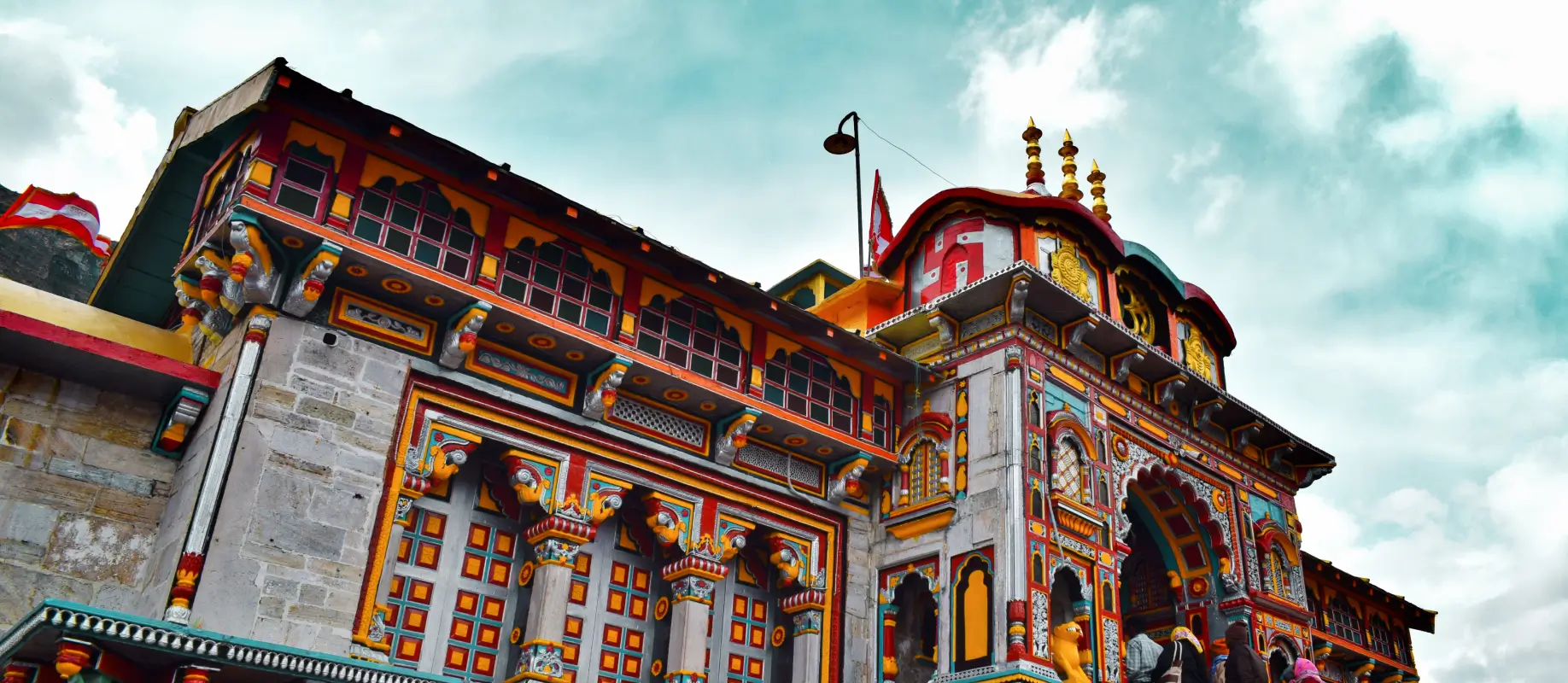
The temple itself is not hidden. It stands right there in the middle of the town, with its bright colours and familiar structure.
Still, the first darshan is rarely rushed.
People move in lines, sometimes long ones, sometimes shorter depending on the day. There is conversation, but it is softer than what you might expect in crowded places.
Inside, the moment is brief. A few seconds in front of the idol, hands folded, thoughts not always clear or even fully formed. It sounds simple when described like this. But many visitors step away quietly, as if they are still processing something. Not always emotional, not always overwhelming. Just… still.
The Evening Aarti Feels Unhurried
If mornings feel purposeful, evenings feel reflective.
The Badrinath Arti draws people back to the temple after a day of movement. By then, the temperature has dropped again. The crowd gathers, but it feels less like a queue and more like a shared pause.
The lamps are lit. The chants begin. The mountains in the background fade into shadow.
Nobody seems to be in a rush to leave.
Some sit through the entire aarti. Others stand at a distance, watching quietly. A few close their eyes and simply listen. It is not grand in the way big temple ceremonies sometimes are. It is smaller, more contained.
And that seems to be enough.
Taking the Helicopter Route
Not everyone makes the journey by road anymore. The Badrinath helicopter Route has made the trip accessible to those who cannot manage long travel hours.
From Dehradun, helicopters carry pilgrims across the mountains in a matter of hours. The views are different. Wider, perhaps more dramatic. Snow peaks stretch out in every direction.
But something shifts in the experience.
There is less time to adjust, less time to notice the small changes in landscape and rhythm. Some travellers appreciate the efficiency. Others feel they missed something along the way, even if they cannot quite explain what.
There is no right way, really. Just different ways of reaching the same place.
Small Realities of the Yatra
Badrinath is not uncomfortable, but it is not effortless either.
The altitude can affect breathing, especially for those not used to it. Even short walks feel longer. Evenings turn cold quickly, sometimes unexpectedly so.
Shops close early. Food options are simple. Mobile networks come and go.
None of this is unusual for the region. Still, it helps to be prepared. Warm clothes, basic medicines, and a bit of patience go a long way.
Most people adjust within a day or two. After that, these details stop feeling like inconveniences and start blending into the experience.
What People Carry Back
Not everyone returns from Badrinath with the same story.
Some talk about the temple. Others remember the river more vividly. A few recall the long drives, the sudden stops for tea, and the conversations with strangers who felt familiar by the end of the journey.
There is no single takeaway.
And maybe that is the point. The place does not insist on being understood in one way. It allows for different experiences, different meanings.
People arrive with expectations. They leave with something quieter.