Like it's said, the connection to the divine, once provoked, doesn't just fade. The spark lives on, and even after you think you're done with the pilgrimage, the connection sparkles once again. The Panch Badri Yatra is one such spark which ignites after you've visited the mighty Badrinath Dham.
The Big 4 Dhams are talked about everywhere, but places like Panch Badri Dham are not something you can ignore once you've heard about them. Panch Badri Dham, as the name itself suggests, is a circuit of 5 Vishnu temples that include Badrinath, Adi Badri, Bhavishya Badri, Vridh Badri, and Yogdhyan Badri.
The Significance of the Panch Badri Darshan
Stepping into these high-altitude reaches is rarely a simple holiday. It feels more like pulling back a heavy curtain, layer by layer, to see what lies behind the noise of the modern world. We often treat spirituality as a destination, but in the Garhwal Himalayas, it is quite clearly a process.
The Panch Badri circuit asks something of you: a little sweat, a fair bit of patience, and the willingness to go where the tour buses generally don't.
While the main Badrinath shrine acts as the obvious magnet for thousands, the true character of this landscape hides in the smaller, weathered sanctums nearby. Here, the myths feel less like stories and more like the very bedrock of the mountains.
Every temple represents a facet of Vishnu, and traversing this circuit is less like ticking boxes and more like reading a long, sprawling poem written in stone and mountain mist.
Panch Badri: The Shrines Of The Himalayas
BadrinathBadrinath remains the anchor, the point of gravity for everything else. Tucked tightly between the towering shoulders of the Nar and Narayana ranges, it sits beside the Alaknanda, which churns past with a roar that sounds like a thousand prayers at once.
Local lore suggests this was once a thick, sprawling forest of Badri, or wild jujube trees, which eventually gave the place its name. When you find yourself standing before the vibrant, gilded facade of the temple, the sheer history of the place starts to sink in.
Adi Shankaracharya is said to have pulled the idol from the nearby Tapt Kund, effectively grounding the Vedic tradition in this jagged landscape. It is not just a destination; it is the heart beat of the circuit.
The air here carries a strange, biting cold that smells of incense and woodsmoke, and for a moment, the frantic pace of the world you left behind just dissolves into the background.
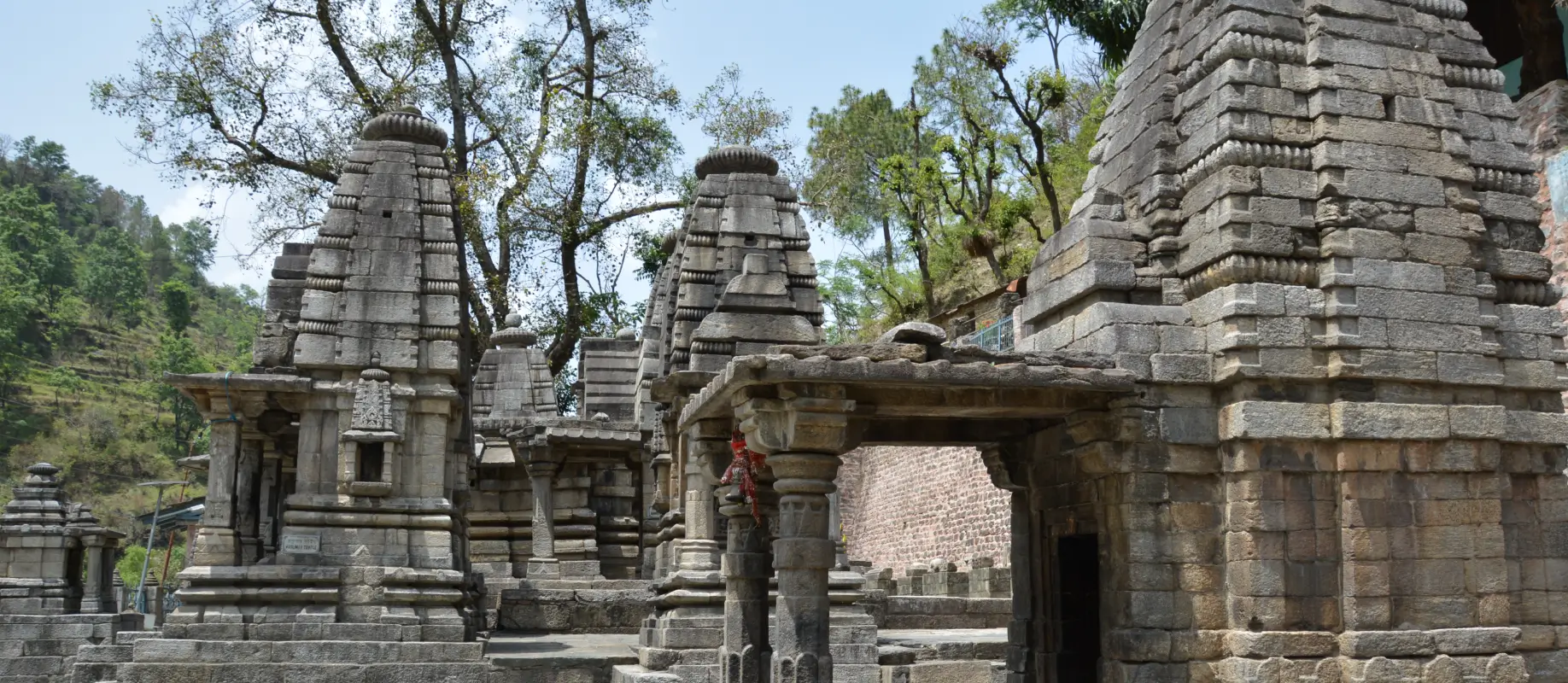
Adi BadriIf you want to understand the origins, head to Adi Badri. Located near the quiet settlement of Chaukhan, this site feels like an archaeological secret that the mountains are trying to protect. It is a cluster of sixteen tiny temples, thought to be relics from the Gupta era, and they lack the polish of the main shrines.
That is precisely why they matter. There is a raw, unvarnished grace to the place. You won't find the crushing crowds here. Instead, you walk through grassy courtyards where the only conversation is the sound of the wind rattling through the pine needles.
It is humbling to realise that long before Badrinath became the centrepiece, this was where the divine was sought. It reminds you that sanctity does not need a massive footprint to leave a deep impression.
Bhavishya BadriThere is something undeniably haunting about the path to Bhavishya Badri. Sitting near Joshimath at over 2,700 metres, this is not a place you just stumble upon. You have to earn it, pushing your legs through a dense, quiet forest until the trees finally break.
The name means ‘the Future Badri' and carries the weight of a prophecy. They say that when the world becomes too heavy with conflict and the route to the current Badrinath eventually shuts, this is where the deity will reside.
Reaching this shrine is a lesson in perspective. The trek burns your lungs, but the silence at the top settles your mind. It is a lonely, beautiful spot that feels like a quiet promise made by the mountains to the generations yet to come.
Vridha BadriThe village of Animath hosts Vridha Badri, or the Old Badri. This is where the legend of Narada comes alive.
The story goes that Vishnu manifested as an elderly man here to test the sage's devotion. Today, it remains an intimate, deeply domestic kind of holy site. You don't come here for a spectacle; you come to sit in the small, wooden-framed temple and watch the light hit the hillsides.
There is a dignified age to everything in Animath. The priests possess a calm that seems to mirror the permanence of the surrounding peaks. It is a place that asks you to sit still, breathe, and finally stop trying to make sense of everything with your head, choosing instead to feel the weight of the place.
Yogdhyan BadriDown in Pandukeshwar, Yogdhyan Badri serves as a vital link in the chain. Tradition holds that King Pandu performed his penance here, seeking solace after relinquishing his throne. But its role is also practical; when the deep winter snows make the high-altitude shrines impossible to reach, the idol from Badrinath is brought down here for the season.
It is a place of transit and deep, meditative quiet. The temple feels grounded and solid, built to weather the storms that roll off the peaks. When you visit, you feel the continuity of it all—the way the rituals shift with the seasons, matching the rhythm of nature itself.
It is a bridge between the legends of the Mahabharata and the very real lives of the people who call these mountains home.
When to Visit the Panch Badri Circuit
The Himalayas are not interested in our calendars. The ideal window to visit the Panch Badri Dham circuit is May-June and September-October.
Arrive in the peak of summer, and you will find the trails busy but the weather kind. If you value silence over sunshine, aim for the shoulder months of June or September.
Beware the monsoon; July and August turn the mountains into a lush, green, and often perilous landscape where roads can wash away in an afternoon.
Always watch the sky, as the weather up here does not ask for permission before it changes.
How to Reach Panch Badri Circuit
Getting here is an exercise in patience. Rishikesh is your primary jumping-off point, connecting to the wider rail network, but from there, you are committed to a long, twisting road journey.
For those pressed for time, flights into Dehradun's Jolly Grant Airport shorten the journey slightly.
Regardless of how you start, you will eventually find yourself on mountain roads that demand slow, careful driving. Take your time.
The views are part of the pilgrimage, and the winding roads are simply the price you pay for reaching these hidden pockets of grace.