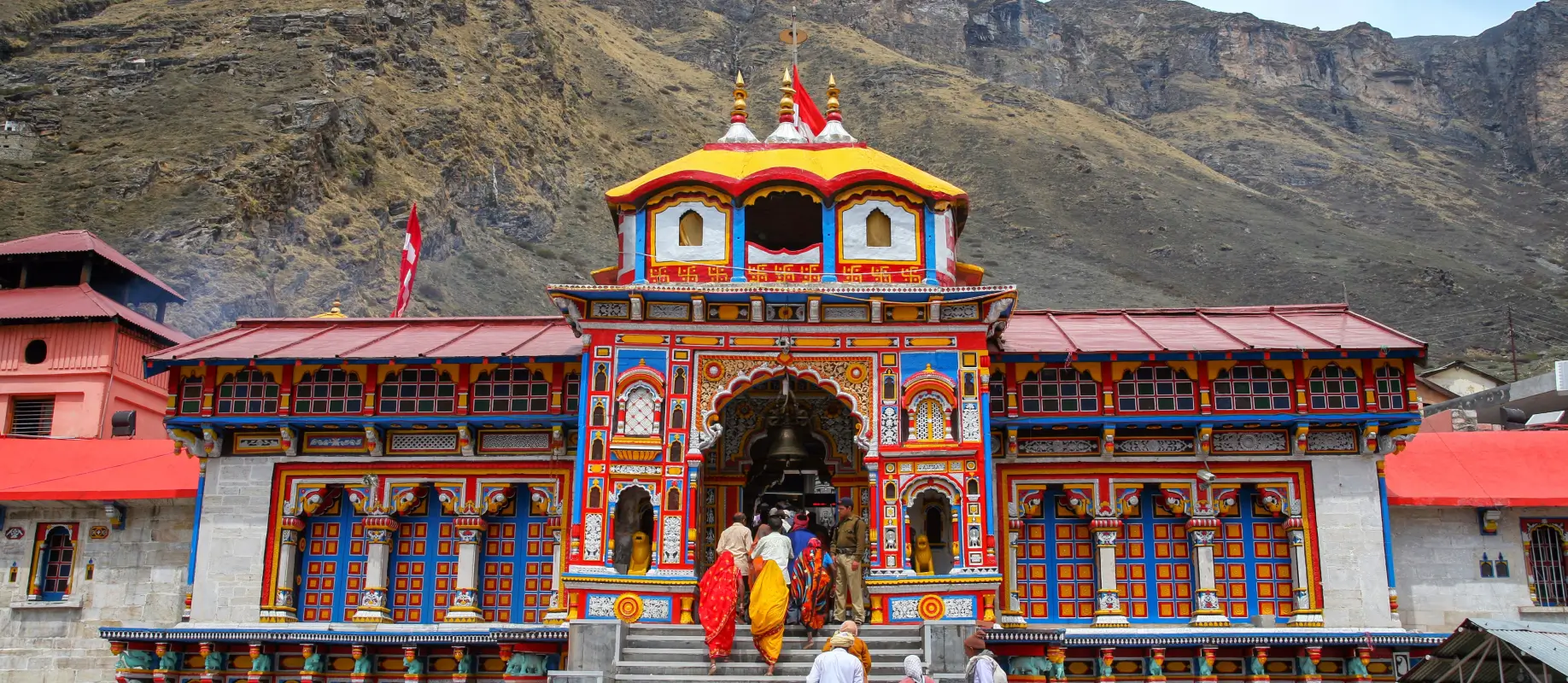
The air at Badrinath carries a sharp, mountain chill that stays with you even when the sun is bright. If you walk just a few hundred metres north of the main temple complex, past the small stalls selling brass bells and dry fruits, the roar of the Alaknanda River grows impossibly loud. The water here is a swirling, glacier-fed grey, churning violently against the dark rocks of the Garhwal Himalayas. Right on the edge of this roaring torrent lies a flat, unassuming stone platform.
This is Brahma Kapal, Badrinath.
To someone who doesn't know what to look for, it might seem like any other rocky outcrop along a Himalayan riverbank. Yet, for pilgrims who navigate the winding, often treacherous mountain roads to reach this high-altitude valley, this specific patch of rock is the most spiritually significant geographic point for honouring their ancestors. It is a place built entirely around memory, duty, and the quiet peace of souls that have passed on.
The Severed Skull: Understanding Brahma Kapal History
The background of this sacred platform is preserved in ancient Puranic narratives. The name itself translates literally to "The Skull of Brahma," a title originating from a fierce confrontation between two of the primary deities in the Hindu pantheon.
According to these accounts, Lord Brahma, the creator, originally possessed five heads. An intense theological argument, or perhaps an instance of cosmic hubris, deeply angered Lord Shiva. In his wrath, Shiva took the terrifying form of Bhairava and severed Brahma’s fifth head.
Severing the head of a Brahmin—even more so the creator of the universe—carried a catastrophic cosmic consequence known as Brahmahatya Dosha. As a physical manifestation of this karmic debt, the severed skull (kapal) of Brahma became miraculously fused to Shiva’s hand. No matter where Shiva travelled across the earth or the heavens, the skull remained stuck to his palm, serving as a permanent, visible reminder of his transgression.
Shiva wandered as an ascetic for eons, searching for a way to rid his body of the skull and his soul of the sin. His long journey eventually brought him to the high, snow-rimmed valley of Badrinath. The moment Shiva stepped onto the riverbank at this exact rocky outcrop, the skull detached from his hand and tumbled to the earth.
Shiva was instantly liberated from the burden. Because the creator's skull fell here, the site became eternally sanctified, taking the name Brahma Kapal. The theological message for human pilgrims is straightforward: if a supreme deity could find absolute absolution from the deepest possible sin at this spot, the human soul stands an even greater chance of finding peace here.
Cosmic Liberation: Brahma Kapal Significance
In the traditional landscape of afterlife rituals, three primary sites form a vital trilogy for ancestral rites: Gaya in Bihar, Prayagraj in Uttar Pradesh, and Brahma Kapal in Badrinath. However, the brahma kapal significance holds a unique, definitive position among them.
While rituals performed at other sacred locations help ancestors progress comfortably through their afterlife journey, the rites executed at Brahma Kapal provide Kapal Mochan—absolute liberation from the cycle of rebirth.
According to local belief, a full shradh at brahma kapal ensures that the departed souls achieve permanent satisfaction. They transcend the ancestral realm (Pitru Loka) and enter the divine realm of Lord Vishnu (Vaikuntha).
Because of this ultimate resolution, family traditions often dictate that once a soul has been offered prayers here, the family no longer needs to perform the annual rites for those specific individuals. It is considered the final spiritual duty a descendant can perform for their forebears.
Tending to the Lineage: Pind Daan in Badrinath
Watching the rituals take place on the dark stone platform is a deeply moving experience. Strangers sit shoulder to shoulder on the cold ground, completely oblivious to the freezing spray of the Alaknanda, focused entirely on a single, quiet purpose: thanking the people who gave them their lineage.
The Practical Steps of the Rituals
If you are planning to organise the pind daan in Badrinath for your family, the process is deeply ritualistic but highly organised.
- Who Can Perform the Rites: Traditionally, the eldest son or male lineage holders perform these ceremonies. However, family lines evolve. Local priests routinely guide daughters, sons-in-law, or extended family members through the steps if no direct male heir is present. The core requirement is simply the intent of remembrance.
- The Materials and Offerings: The central elements of the ceremony are Pindas—soft, cooked balls made from rice or barley flour (jau). These are mixed with black sesame seeds, raw milk, honey, clarified butter (ghee), and kusha grass.
- The Role of the Priests: The entire ceremony is facilitated by the Tirtha Purohits (local pilgrimage priests). They sit opposite you, chanting specific Vedic mantras designed to summon the spirits of your ancestors across multiple generations.
- The Procedure: Under the priest's careful guidance, you will shape the offerings, infuse them with water, and softly recite the names and family titles of your departed relatives. Once the prayers wrap up, the Pindas are reverently gathered and immersed directly into the fast-flowing currents of the Alaknanda River.
The entire sequence of the brahma kapal rituals takes roughly 45 to 60 minutes, depending heavily on the size of the crowd and the depth of the specific ancestral line you wish to name.
Seasons, Timings, and Pitru Paksha
Badrinath sits high in the high alpine regions of Uttarakhand, which means your visit is completely dependent on the weather.
The town is accessible only from May to November each year. During the winter months, heavy snow cuts off the roads completely, and the temple deities are moved down to Joshimath.
The brahma kapal rituals are performed strictly during daylight hours, typically beginning around 6:00 AM and wrapping up by late afternoon. While you can perform these rites on any day the town is accessible, the 16-day lunar period of Pitru Paksha (usually falling in September or October) is considered the most potent time.
During Pitru Paksha, the platform transforms into a sea of white clothes, incense smoke, and low, rhythmic chanting. If you plan to visit during this peak period, expect larger crowds and longer wait times.
Practical Survival Tips for Pilgrims
- Arrive Before the Rush: The morning hours are bitterly cold, but the peace is unmatched. Arriving by 6:30 AM allows you to complete your rites before the heavy rush of regular temple tourists blocks the pathways.
- Prepare Your Lineage List: Before leaving your home town, speak with your elders. Write down the names, passing dates (if known), and the gotra (clan lineage) of both your paternal and maternal sides on a piece of paper. Trying to remember names while a priest is chanting can be stressful.
- Dress Warmly and Sensibly : The wind coming off the Alaknanda River is sharp. Wear traditional clothes out of respect, but make sure you have warm thermal layers underneath. You will be sitting on stone floors for an hour.
- Consult Priests the Evening Before:Walk down to the river bank the evening before your intended ritual. Introduce yourself to a local priest, clarify the dakshina (fee) beforehand, and secure a specific time slot to avoid any last-minute transactional confusion.
A Moment on the Rocks
Beyond the heavy theology and the precise execution of the mantras, a visit to Brahma Kapal is fundamentally an exercise in profound gratitude.
In the friction of daily life, we rarely pause to think about the long, completely unbroken human chain that had to exist for us to be alive today. Every single ancestor survived hardships, made choices, and passed down a spark of life through centuries of history. Standing by the Alaknanda, watching a small offering of rice dissolve into the gray glacial waters, is a humbling reminder of our own brief place in time. It is a moment to look back, say a quiet thank you, and honor the deep roots that anchor us to the present.