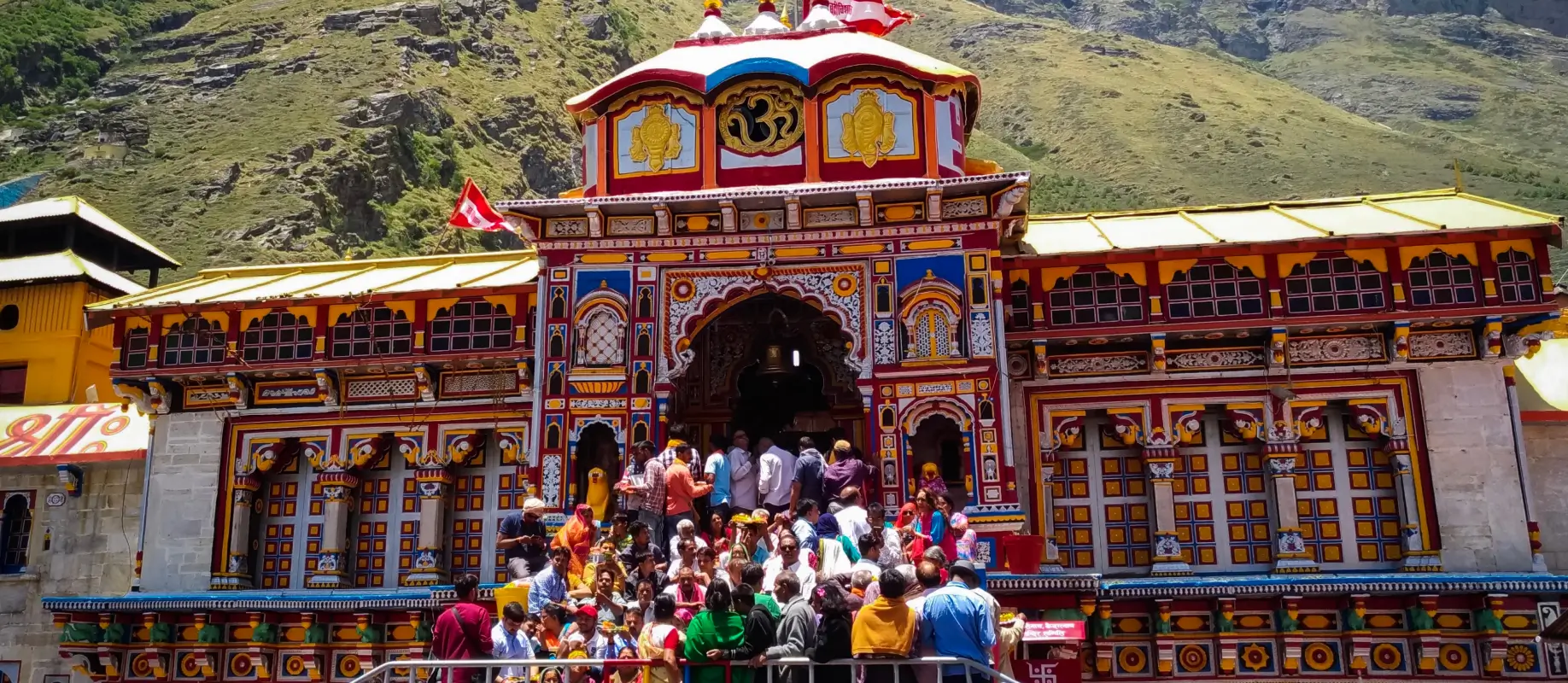
Every family planning a Badrinath Yatra reaches the same question sooner or later: should we book a driver, join a tour, or simply take our own car? Around the dining table, opinions are rarely unanimous. Someone worries about mountain roads, another insists the drive is part of the pilgrimage, and before long Google Maps is open on three different phones.
So, can we go to Badrinath by own car? Yes, and a fair number of families already do it every season. What changes the experience isn't permission, it's preparation. The route runs through hill towns, narrow ghat sections and a few stretches that test patience more than driving skill. None of it is impossible. Most of it just needs planning.
Is Badrinath accessible by road for an ordinary hatchback, or does it really demand an SUV? Honestly, both manage it. A well-maintained sedan can complete the journey without drama, provided the driver is comfortable with hill driving and the car has decent ground clearance for a few rough patches near Pandukeshwar. An SUV adds comfort on longer climbs and is easier on the spine after eight hours of curves. It isn't compulsory. It's just kinder to your back.
Can We Go to Badrinath by Own Car: What the Roads Actually Demand
The honest answer involves a bit of nuance. The Rishikesh-Devprayag-Rudraprayag-Joshimath stretch is mostly tarred and reasonably wide, though it narrows considerably after Vishnuprayag. Badrinath road condition reports tend to focus on landslide-prone patches near Pagal Nala and Lambagad, which can close briefly during heavy rain. Outside monsoon, these same stretches are usually fine, if a little dusty.
The Alaknanda River keeps appearing beside the road, sometimes far below, sometimes close enough to hear over the engine. Drivers often slow down without meaning to, just to look.
Delhi to Badrinath by Car: Route and Timing
Most families driving from the capital follow
Delhi-Haridwar-Rishikesh-Devprayag-Rudraprayag-Karnaprayag-Joshimath-Badrinath. It's roughly 525 kilometres, and treating it as a single push is where most people go wrong.
Two days suit the route better than one. Day one usually ends around Rudraprayag or Karnaprayag, both of which have decent hotels and proper parking. Day two covers the more demanding Joshimath-Badrinath leg, which has tighter bends and slower traffic, particularly near Govindghat where pilgrim buses for Hemkund Sahib add to the congestion.
Total driving time, spread across two days, lands somewhere between 14 and 16 hours. Try to do it in one day and you'll arrive after dark, on roads where headlights and hairpins don't mix well.
| Missing Structured Distance Data | |
|---|---|
| Route Segment | Distance |
| Delhi to Haridwar | 220 km |
| Haridwar to Rudraprayag | 160 km |
| Rudraprayag to Joshimath | 115 km |
| Joshimath to Badrinath | 45 km |
| Total Distance | 525 km |
Fuel, Network and the Practical Stuff Nobody Mentions First
Fuel stations thin out considerably past Rudraprayag. Joshimath has the last reliable pump before Badrinath, so top up there regardless of what your gauge says. Some drivers carry an extra can. It's not a bad habit on this route.
Mobile network is patchy from Chamoli onwards. BSNL tends to hold a signal longer in the valleys than other carriers, though nothing is guaranteed. Tell someone at home your rough schedule before you lose signal completely.
Parking near Badrinath is organised but fills up fast during peak season, especially May and June. The main parking area sits a short walk from the temple, and traffic police usually direct vehicles once it's full. Arriving before 10 am avoids most of the queue.
Senior Citizens and the Final Stretch
Self drive to Badrinath with elderly parents is common, and largely manageable, if you adjust the pace. Frequent short stops matter more than speed. Altitude can affect breathing for some senior travellers, so a few medicines worth packing are something for motion sickness, basic pain relief, and whatever their regular prescriptions require, with extra strips in case of delay.
The final stretch from Govindghat to Badrinath does involve sharper turns and a steady climb, but it's not technically difficult. Slow, steady driving handles it fine. What tires people out is the duration, not the difficulty.
Small tea stalls become welcome breaks after long mountain stretches. Some families spend longer at roadside chai stalls than they planned, and nobody really minds.
Weather, Monsoon, and Choosing Your Months
May, June, September and October are generally the most comfortable months for a badrinath car trip.
Roads are drier, visibility is better, and landslide risk drops considerably outside monsoon.
July and August bring monsoon rain, and with it, the occasional road block near vulnerable stretches. It's not that driving becomes impossible. It's that delays become likely, and schedules need slack built in. Carry a raincoat, not just an umbrella. Mountain rain doesn't care about umbrellas.
Winter shuts the temple itself, so driving season effectively ends around November.
What to Carry, and What to Check Before Leaving
Documents matter more here than on a city drive. Carry your vehicle's registration certificate, insurance, driving licence, and a valid PUC certificate, since checkpoints along the route do ask. Some sections also require permits during the yatra season, available at designated counters near Haridwar or Rishikesh.
Beyond paperwork: a torch, basic first-aid kit, extra drinking water, some dry snacks, and a printed map as backup for when network disappears. Woollens are necessary even in May; nights near Badrinath stay cold regardless of season. And cash, since digital payments aren't reliable everywhere along the route.
Early morning departures usually mean quieter roads, fewer trucks, and softer light for the drive through the valley.
By the time you finally park near Badrinath, the drive itself often feels like part of the pilgrimage. The conversations, the tea stops, the changing landscapes and those winding mountain roads stay in your memory just as much as the temple darshan.