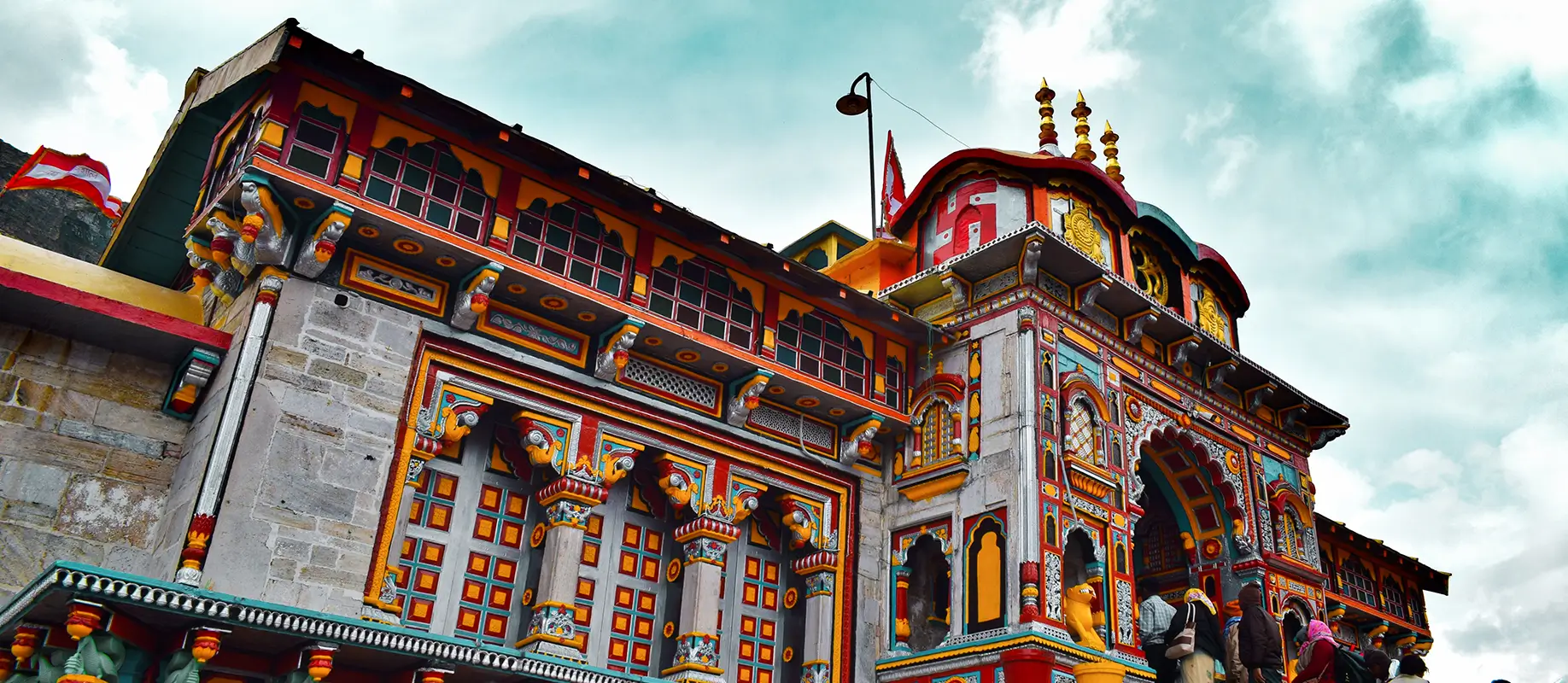
There are some journeys that feel planned, and then there are others that feel like they are slowly unfolding as you travel. Badrinath falls into the second category. You don’t just “reach” Badrinath, you approach it. The road narrows, the mountains grow taller, the air changes somewhere after Joshimath, and people get quieter without quite realising it.
By the time the Temple comes into view, most travellers have already gone through something. Long drives, sudden weather shifts, small roadside tea stops, mild headaches from the altitude. And only then comes the Darshan.
The Season Decides Everything
One of the first things people misunderstand about Badrinath Temple Darshan is that it is not open throughout the year.
Snow controls the calendar here.
The Temple generally opens sometime between late April and early May, with the exact date depending on religious calculations and weather conditions. It closes again around October or early November before heavy snowfall makes the region inaccessible. Through winter, worship shifts to Joshimath.
So timing matters. Not just spiritually, but logistically.
If you plan too early in the season, roads can still be unpredictable. If you go too late, temperatures drop sharply and travel windows shorten. The mountains do not rush for anyone.
Darshan Timings Without Overcomplicating It
The Temple follows a daily routine, and it has for years.
Morning rituals begin around 4:30 am, including the Maha Abhishek. After the initial rituals, general Darshan begins. Around early afternoon the Temple closes for a few hours, then reopens in the evening and continues until roughly 8:30 or 9:00 pm, ending with the Shayan Aarti.
That is the broad structure.
Exact timings may shift slightly depending on the season and special observances, so checking locally once you arrive is always sensible.
But here is something many people don’t realise. Standing in line at 5 am in the plains is one thing. Standing in line at 5 am at over 3,000 metres is something else entirely. It is colder, breathing feels different, and even simple waiting takes effort.
So it helps to plan your energy, not just your schedule.
What the Actual Darshan Feels Like
Inside the Temple, things move steadily.
The idol of Lord Badri Vishal sits in meditation. The sanctum is not massive, and there is no elaborate display or dramatic lighting. Just stone walls, chants, and the sound of bells at intervals.
Your turn comes. You step forward, you look, and then you are gently guided along.
It lasts seconds.
Sometimes that surprises people. But perhaps that is also why the journey matters so much. The effort stretches the moment.
Special pujas like Maha Abhishek can be booked in advance through the temple authorities. These usually take place early in the morning and require prior arrangement. If you want something specific, planning ahead helps. Otherwise, general Darshan remains open to all.
The Drive Up Matters More Than You Think
Most visitors travel from Rishikesh, Haridwar or Dehradun. The mountain drive can take ten to twelve hours, sometimes more if traffic builds up.
Road work, landslides during monsoon, occasional traffic halts. All of this is normal here.
Altitude is another factor people tend to underestimate. At over 3,000 metres, some travellers experience mild headaches or fatigue. Nothing dramatic, but noticeable.
It helps to reach a day earlier and rest. Drink water, eat light meals, and move slowly during the first evening. There is no prize for rushing.
Clothing and Quiet Rules
There is no loud signboard announcing a dress code, but expectations are understood.
Simple clothing works best. Covered shoulders, covered knees, and a few layers because mornings remain cold even in summer.
Footwear is left outside the Temple. The stone flooring can feel icy before sunrise, so socks are practical.
Phones are usually restricted inside the Temple premises, and photography in the sanctum is not permitted. Conversations naturally soften once you enter. The space encourages it.
During peak months, queue discipline becomes important. The staff manage crowds calmly, but patience from visitors makes a real difference.
Crowd Reality
May and June are busy. Very busy.
If slightly thinner crowds are preferable, September often feels more manageable, though evenings become colder. Early morning Darshan usually moves more smoothly than mid morning.
Afternoons sometimes appear less crowded, but mountain weather can shift quickly. Rain arrives without much warning.
There is no perfect time. Only better planning.
Tapt Kund and the Ritual Bath
Just below the Temple lies Tapt Kund, a natural hot water spring. Many pilgrims choose to bathe there before Darshan.
The water remains warm even in cold air. Facilities are basic, and during peak season the area can feel crowded.
Some visitors participate fully, while others simply wash their hands and forehead. Both approaches are common.
Staying in Badrinath
Accommodation in the town ranges from simple dharamshalas to modest hotels. Because of the terrain, luxury stays are limited.
During the yatra season, room rates usually fall between INR 800 and INR 3,500 per night depending on demand and comfort level. Hot water may be available only at specific hours. Electricity is mostly stable but can flicker during heavy rainfall.
Advance booking during peak season helps avoid last minute stress.
Expect practicality rather than indulgence.
Weather Is Not a Side Note
Even in summer, mornings can feel cold. Carry a light jacket and possibly gloves if you are sensitive to lower temperatures.
Monsoon months increase the possibility of road delays due to landslides. Winter closes access entirely.
Keeping one buffer day in your itinerary often makes mountain travel much easier.
Flexibility helps.
Combining Badrinath With Other Visits
Many travellers include Kedarnath, Gangotri or Yamunotri as part of the Char Dham circuit. Mana Village, a short distance from Badrinath, is also commonly visited and is often referred to as the last Indian village before the Tibet border.
Distances between these places may look manageable on maps, but mountain roads slow everything down.
Time expands in the hills.
What People Don’t Always Say
Badrinath Temple Darshan is not dramatic. It is not cinematic. It is structured, brief, almost understated.
And yet the memory tends to stay.
Maybe because the journey filters out impatience. Maybe because altitude slows the body enough for the mind to settle. Or maybe because some places simply ask you to arrive fully, not hurriedly.