Some places don’t announce themselves immediately. They take their time.
The road to Badrinath Temple is like that. Long stretches of driving, turns that feel repetitive after a while, sudden glimpses of the river, then nothing for a bit. It doesn’t feel dramatic at first. Just another mountain route, maybe a little colder than expected. But somewhere along the way, without any clear moment marking it, the journey starts feeling different.
People often talk about Badrinath Dham Darshan as if it’s a single moment. Reaching the temple. Standing in line. Seeing the deity. But that’s not really how it plays out. It stretches. It builds slowly. And by the time someone actually gets there, the experience has already begun hours, sometimes days, earlier.
A Landscape that Unfolds Slowly
The temple is set high up in Uttarakhand’s Chamoli district. Numbers will say over 3,000 meters above sea level, but that doesn’t quite capture it. What stands out more is the air. Slightly thinner. A little sharper. Conversations don’t last as long. People pause more, even if they don’t realise it.
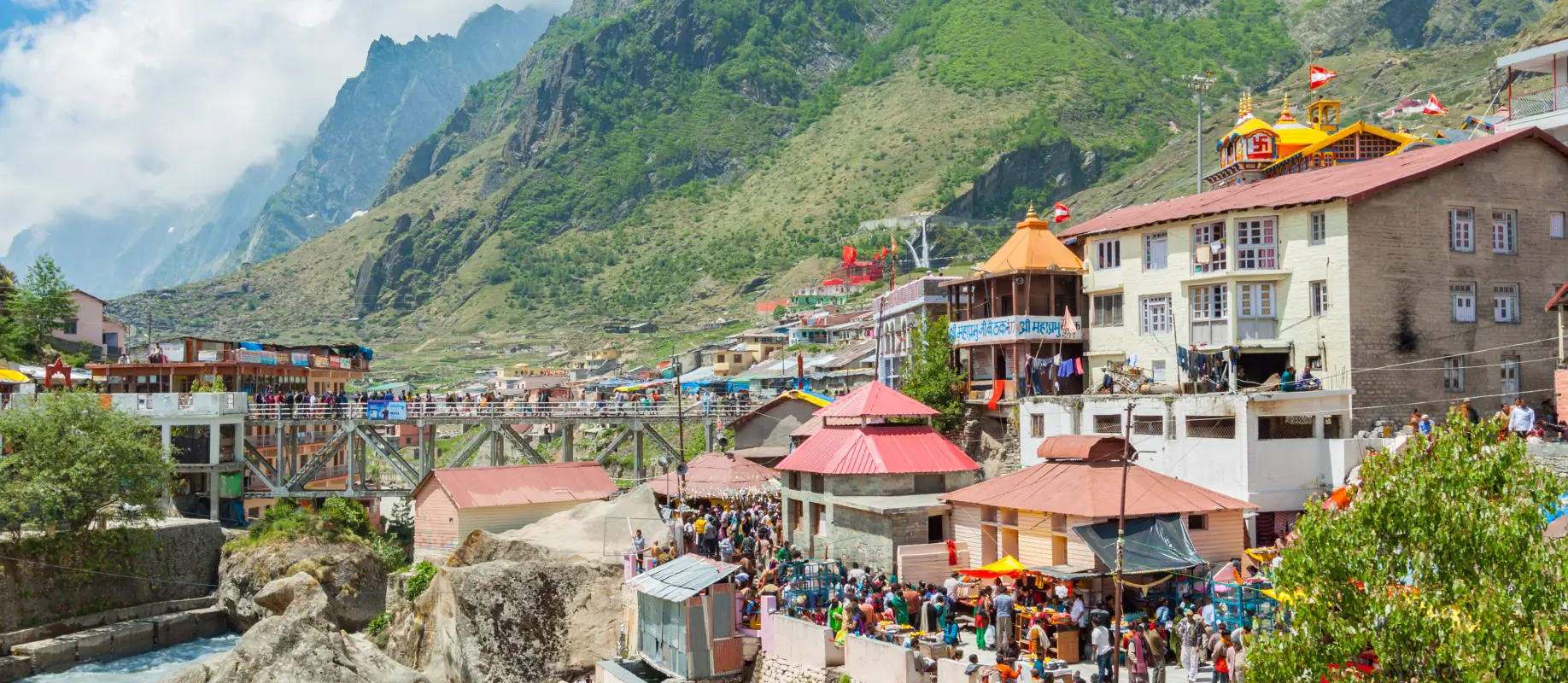
And then there’s the setting. Mountains on both sides, not in a dramatic towering way at all times, but steady. Present. The Alaknanda River moving alongside, sometimes loud, sometimes barely noticeable depending on where one stands. It all comes together quietly.
The temple itself is dedicated to Lord Vishnu, worshipped here as Badrinarayan. The story most people hear is about Vishnu meditating in this region, surrounded by berry trees, which is where the name “Badri” comes from. It’s a familiar story. But hearing it while actually being there feels slightly different. Less like mythology, more like context.
The Unpredictable Rhythm of the Road
The Badrinath Temple pilgrimage is usually part of the Char Dham circuit. Still, it doesn’t feel exactly the same as the others. There’s no long trek like Kedarnath. No extended climb that tests endurance in the same way. It’s accessible by road, which changes things.
But accessible doesn’t mean effortless.
The roads are still mountain roads. Narrow at points. Occasionally delayed because of weather or minor disruptions. Sometimes smooth, sometimes not. Travel plans tend to loosen a bit here, even for people who usually like things scheduled down to the hour.
And maybe that’s not a bad thing.
On reaching the temple town, the first thing that stands out is the colour. The structure doesn’t blend into the surroundings. It stands out against them. Bright, almost unexpectedly so. For a second, it feels out of place. Then it doesn’t.
Inside, things shift again. The movement slows. The sound changes. Even the way people speak changes slightly. Not quieter exactly, but more measured. The idol of Lord Vishnu sits in a meditative posture, and the space around it feels contained, separate from the outside movement.
Darshan is brief. It has to be. There are too many people for it to be anything else during peak time. But it rarely feels incomplete. That’s something people notice later, not immediately.
Inside the Painted Walls of Tradition
The Badrinath Temple history comes up often, but not always in a structured way. It’s mentioned in bits. Someone talks about Adi Shankaracharya re-establishing the temple in the 8th century. Someone else brings up how old the site is considered in mythology. None of it feels like a formal history lesson. More like pieces that slowly form a picture.
The temple has been rebuilt and restored multiple times. That’s expected in a place where weather can be harsh and unpredictable. And yet, the continuity is what stands out. The rituals continue. The structure changes, but the purpose doesn’t.
There’s also that detail about the priests coming from Kerala. It tends to catch people off guard the first time they hear it. A temple in the Himalayas, managed by priests from the south. It says something about how these traditions developed. Not loudly. Just in the background.
The idea of Lord Vishnu in Himalayas has its own kind of quiet logic. Vishnu is associated with preservation, balance. The Himalayas are usually linked with stillness, isolation, sometimes even detachment. Putting the two together creates something that feels… balanced, in a way that’s hard to define directly.
A visit here doesn’t follow a strict script, even if the steps are familiar. Many people stop at the Tapt Kund before entering the temple. The water is warm, which feels strange at that altitude, especially with the cold air around. It’s one of those small details that stays in memory.
From there, it’s a gradual movement toward the temple. Lines form, dissolve, form again. Bells ring somewhere, not constantly, just enough to be noticed. Time stretches a little.
Darshan happens. And then it’s over.
But not really over.
What Lingers Long After the Visit
The timing of the visit changes things more than most expect. Summer months bring more people, more movement, a slightly faster pace. Monsoon slows everything down. Roads take longer. Plans shift. The landscape turns greener, quieter. Then there’s September, which feels like a pause, when things settle slightly after the rains.
Each version feels different. None of them feel wrong.
Practical details exist, of course. Altitude affects some people more than others. Accommodation depends on when one arrives. The route through Rishikesh and Joshimath has its own rhythm. Network comes and goes. None of it is dramatic enough to dominate the experience, but it’s there. What’s harder to explain is why people return.
Because they do.
Not always immediately. Not always with the same urgency. But the place stays somewhere in memory. And maybe that’s what Badrinath Dham Darshan really becomes for many people. Not just a visit. Not just a ritual. Something that continues a little even after leaving.